Citation: Lizhuang Zhong, Ming Liu, Shilong Su, Dongxin Zeng, Jing Hu, Zhiqian Guo. Engineering stimuli-responsive block copolymers for multimodal bioimaging[J]. Chinese Chemical Letters, ;2026, 37(1): 111512. doi: 10.1016/j.cclet.2025.111512 shu

Engineering stimuli-responsive block copolymers for multimodal bioimaging

Figures(7)

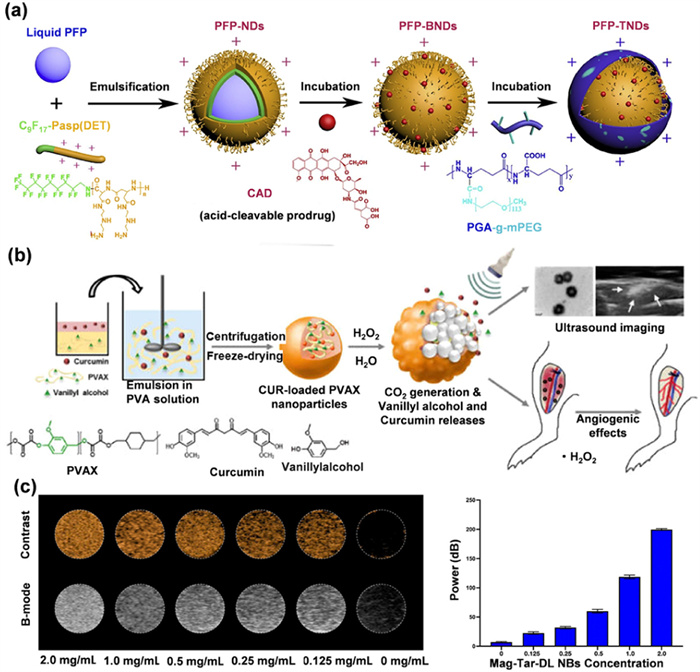
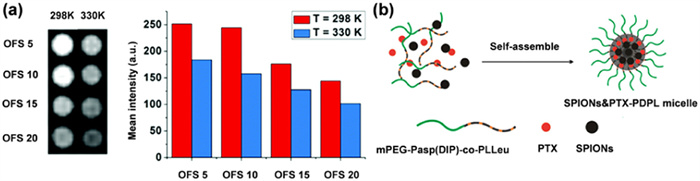
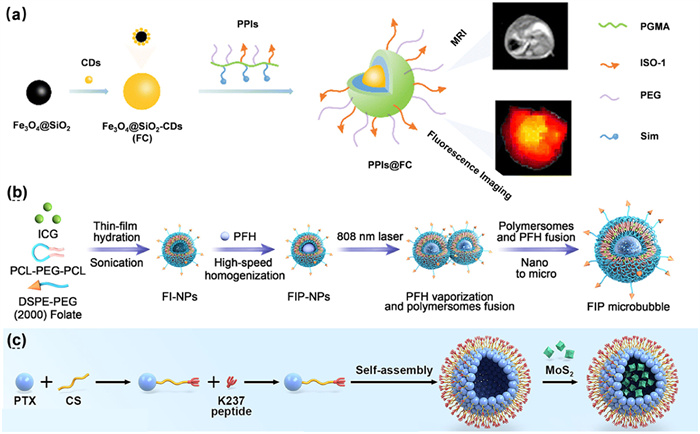
  • The diagnostic efficacy of contemporary bioimaging technologies remains constrained by inherent limitations of conventional imaging agents, including suboptimal sensitivity, off-target biodistribution, and inherent cytotoxicity. These limitations have catalyzed the development of intelligent stimuli-responsive block copolymers-based bioimaging agents, which was engineered to dynamically respond to endogenous biochemical cues (e.g., pH gradients, redox potential, enzyme activity, hypoxia environment) or exogenous physical triggers (e.g., photoirradiation, thermal gradients, ultrasound (US)/magnetic stimuli). Through spatiotemporally controlled structural transformations, stimuli-responsive block copolymers enable precise contrast targeting, activatable signal amplification, and theranostic integration, thereby substantially enhancing signal-to-noise ratios of bioimaging and diagnostic specificity. Hence, this mini-review systematically examines molecular engineering principles for designing pH-, redox-, enzyme-, light-, thermo-, and US/magnetic-responsive polymers, with emphasis on structure-property relationships governing imaging performance modulation. Furthermore, we critically analyze emerging strategies for optical imaging, US synergies, and magnetic resonance imaging (MRI). Multimodal bioimaging has also been elaborated, which could overcome the inherent trade-offs between resolution, penetration depth, and functional specificity in single-modal approaches. By elucidating mechanistic insights and translational challenges, this mini-review aims to establish a design framework of stimuli-responsive block copolymers-based for high fidelity bioimaging agents and accelerate their clinical translation in precise diagnosis and therapy.
  • 加载中
    1. [1]

      C.M.T. Tran, P.S. Dinh, J. Biomol. Struct. Dyn. (2024), doi: 10.1080/07391102.2024.2328744.  doi: 10.1080/07391102.2024.2328744

    2. [2]

      A.G. Robertson, L.M. Rendina, Chem. Soc. Rev. 50 (2021) 4231–4244.  doi: 10.1039/d0cs01075h

    3. [3]

      T.C. Owens, N. Anton, M.F. Attia, Acta Biomater. 171 (2023) 19–36.

    4. [4]

      T. Hu, C. Shen, X. Wang, F. Wu, Z. He, Chin. Chem. Lett. 35 (2024) 109562.

    5. [5]

      M. Zhao, Y. Lu, Y. Zhang, H. Xue, Z. Guo, Chin. Chem. Lett. 36 (2025) 110105.

    6. [6]

      Y. Shi, Q. Yu, L. Tan, Q. Wang, W.H. Zhu, Angew. Chem. 137 (2025) e202503776.

    7. [7]

      Y. Hao, J. Meng, S. Wang, Chin. Chem. Lett. 28 (2017) 2085–2091.

    8. [8]

      L. Guerassimoff, M. Ferrere, A. Bossion, J. Nicolas, Chem. Soc. Rev. 53 (2024) 6511–6567.  doi: 10.1039/d2cs01060g

    9. [9]

      P. Zhang, Y. Wang, J. Lian, et al., Adv. Mater. 29 (2017) 36.

    10. [10]

      S.B. Shotorbani, M.M. Hasani Sadrabadi, A. Karkhaneh, et al., J. Control. Release 253 (2017) 46–63.

    11. [11]

      Y. Song, H. Jing, L.B. Vong, J. Wang, N. Li, Chin. Chem. Lett. 33 (2022) 1705–1717.

    12. [12]

      H. Ding, P. Tan, S. Fu, et al., J. Control. Release 348 (2022) 206–238.

    13. [13]

      Y. Zhang, Y. Li, H. Li, et al., Chin. Chem. Lett. 33 (2022) 501–507.

    14. [14]

      W.H. Tao, Z.G. He, Asian J. Pharm. Sci. 13 (2018) 101–112.

    15. [15]

      Y. Tao, C. Dai, Z. Xie, et al., Chin. Chem. Lett. 35 (2024) 109170.

    16. [16]

      S. Wang, K. Yu, Z. Yu, et al., Chin. Chem. Lett. 34 (2023) 108184.

    17. [17]

      S. Wang, Y. Liu, Q. Sun, et al., Adv. Sci. 10 (2023) 2303167.

    18. [18]

      D. Wei, Y. Sun, H. Zhu, Q. Fu, ACS Nano 17 (2023) 23223–23261.  doi: 10.1021/acsnano.3c06019

    19. [19]

      Q. Zhang, Y.N. Zhang, Y. Wan, et al., Prog. Polym. Sci. 116 (2021) 34.  doi: 10.2979/jmodelite.44.2.04

    20. [20]

      B. Ma, J. Shi, Y. Zhang, et al., Adv. Mater. 36 (2024) 2306358.

    21. [21]

      B. Zhang, D.R. Lu, D.B.R. Wang, et al., Adv. Funct. Mater. 34 (2024) 2407869.

    22. [22]

      D.D. Wang, M. Li, H.N. Zhang, et al., Biomacromolecules 24 (2023) 4303–4315.  doi: 10.1021/acs.biomac.3c00702

    23. [23]

      K. Li, S. Zhou, Y. Chen, P. Xu, B. Song, Sens. Actuator B: Chem. 363 (2022) 131860.

    24. [24]

      H. Zhou, F. Qin, C. Chen, Adv. Healthc. Mater. 10 (2021) 2001277.

    25. [25]

      M.Z. Zhu, G. Ren, J.Q. Guo, et al., ACS Appl. Nano Mater. 7 (2024) 12452–12465.  doi: 10.1021/acsanm.4c00826

    26. [26]

      C. Yan, L. Shi, Z. Guo, W. Zhu, Chin. Chem. Lett. 30 (2019) 1849–1855.

    27. [27]

      H. Yang, M. Li, W. Zhao, Z. Guo, W.H. Zhu, Chin. Chem. Lett. 32 (2021) 3882–3885.

    28. [28]

      N. Badi, Prog. Polym. Sci. 66 (2016) 54–79.

    29. [29]

      A. Abdollahi, H. Roghani-Mamaqani, B. Razavi, M. Salami-Kalajahi, Polym. Chem. 10 (2019) 5686–5720.  doi: 10.1039/c9py00890j

    30. [30]

      L. Beauté, N. McClenaghan, S. Lecommandoux, Adv. Drug Deliv. Rev. 138 (2019) 148–166.

    31. [31]

      Y. Chen, L. Li, G. Han, et al., Chin. Chem. Lett. 36 (2025) 110458.

    32. [32]

      X. Xiao, W. Zheng, Y. Zhao, C.H. Li, Chin. Chem. Lett. 34 (2023) 107457.

    33. [33]

      L.X. Yu, Y. Liu, S.C. Chen, Y. Guan, Y.Z. Wang, Chin. Chem. Lett. 25 (2014) 389–396.

    34. [34]

      F.D. Jochum, P. Theato, Chem. Soc. Rev. 42 (2013) 7468–7483.

    35. [35]

      A. Xie, S. Hanif, J. Ouyang, et al., EBioMedicine 56 (2020) 102821.

    36. [36]

      X.H. Wang, M.Y. Shan, S.K. Zhang, et al., Adv. Sci. 9 (2022) 2104843.

    37. [37]

      F.Q. Wang, G.X. Xia, X.Q. Lang, et al., Colloid Surf. B: Biointerfaces 148 (2016) 147–156.

    38. [38]

      A. Zhang, K. Jung, A. Li, J. Liu, C. Boyer, Prog. Polym. Sci. 99 (2019) 101164.

    39. [39]

      H. Cui, W. Zhu, C. Yue, et al., Chin. Chem. Lett. 35 (2024) 109727.

    40. [40]

      J. Thevenot, H. Oliveira, O. Sandre, S. Lecommandoux, Chem. Soc. Rev. 42 (2013) 7099–7116.  doi: 10.1039/c3cs60058k

    41. [41]

      H. Cai, X.H. Dai, X.M. Wang, et al., Adv. Sci. 7 (2020) 1903243.

    42. [42]

      S. Chen, B. Sun, H. Miao, et al., ACS Mater. Lett. 2 (2020) 174–183.

    43. [43]

      D. Tang, M. Cui, B. Wang, et al., Nat. Commun. 15 (2024) 6026.

    44. [44]

      S.S. Das, P. Bharadwaj, M. Bilal, et al., Polymers 12 (2020) 1397.  doi: 10.3390/polym12061397

    45. [45]

      P. Wei, E.J. Cornel, J.Z. Du, Drug Deliv. Transl. Res. 11 (2021) 1323–1339.  doi: 10.1007/s13346-021-00963-0

    46. [46]

      J.B. Gao, B.Q. Yu, C. Li, et al., Colloid Surf. B: Biointerfaces 174 (2019) 416–425.

    47. [47]

      E. Jung, J. Noh, C. Kang, et al., Biomaterials 179 (2018) 175–185.

    48. [48]

      J. Lin, X.Y. Chen, Y. Li, et al., Mater. Today Bio 26 (2024) 101037.

    49. [49]

      B. Chen, L. Liu, R. Yue, et al., Nano Today 51 (2023) 101931.

    50. [50]

      T.A. Tunca Arın, O. Sedlacek, Biomacromolecules 25 (2024) 5630–5649.  doi: 10.1021/acs.biomac.4c00833

    51. [51]

      A. Usman, C. Zhang, J.C. Zhao, et al., Polym. Chem. 12 (2021) 5438–5448.  doi: 10.1039/d1py00602a

    52. [52]

      H. Xiao, X. Li, C. Zheng, et al., J. Nanopart. Res. 22 (2020) 105.

    53. [53]

      M. Shen, H. Jiang, S. Li, et al., J. Mater. Chem. B 12 (2024) 1344–1354.  doi: 10.1039/d3tb00407d

    54. [54]

      C. Huang, Y. Qin, S. Wu, et al., Nano Lett. 24 (2024) 9561–9568.  doi: 10.1021/acs.nanolett.4c02137

    55. [55]

      P. Wang, Z. Peng, Y.Y. Zhang, et al., Carbohydr. Polym. 335 (2024) 122073.

  • 加载中
    1. [1]

      Huan Hu Ying Zhang Shi-Shuang Huang Zhi-Gang Li Yungui Liu Rui Feng Wei Li . Temperature- and pressure-responsive photoluminescence in a 1D hybrid lead halide. Chinese Journal of Structural Chemistry, 2024, 43(10): 100395-100395. doi: 10.1016/j.cjsc.2024.100395

    2. [2]

      Dongpu WuZheng YangYuchen XiaLulu WuYingxia ZhouCaoyuan NiuPuhui XieXin ZhengZhanqi Cao . Surface controllable wettability using amphiphilic rotaxane molecular shuttles. Chinese Chemical Letters, 2025, 36(2): 110353-. doi: 10.1016/j.cclet.2024.110353

    3. [3]

      Qiangwei WangHuijiao LiuMengjie WangHaojie ZhangJianda XieXuanwei HuShiming ZhouWeitai Wu . Observation of high ionic conductivity of polyelectrolyte microgels in salt-free solutions. Chinese Chemical Letters, 2024, 35(4): 108743-. doi: 10.1016/j.cclet.2023.108743

    4. [4]

      Fanghua ZhangYuyan LiHongyan ZhangWendong LiuZhe HaoMingzheng ShaoRuizhong ZhangXiyan LiLibing Zhang . Logically integrating exo/endogenous gated DNA trackers for precise microRNA imaging via synergistic manipulation. Chinese Chemical Letters, 2025, 36(1): 109848-. doi: 10.1016/j.cclet.2024.109848

    5. [5]

      Yaqiong KongYan SuYong QianRobert J. DeethIsolda Romero-CanelónZhi SuHong-Ke LiuPeter J. Sadler . Unusual dynamic stimuli-responsive metallamacrocyclic configurational switches. Chinese Chemical Letters, 2026, 37(3): 111375-. doi: 10.1016/j.cclet.2025.111375

    6. [6]

      Jialiang XUJiabin CUI . Recent biological applications of corroles: From diagnosis to therapy. Chinese Journal of Inorganic Chemistry, 2024, 40(12): 2303-2317. doi: 10.11862/CJIC.20240245

    7. [7]

      Yubo TanZiying WangYibo AnMan LiDazhuang XuRenyuan LiuXinyu TanYaohui HeZhixiang LuGang Liu . Molecular engineering organometallic sonosensitizer for enhanced sonodynamic therapy via promoting ER stress-mediated HIF-1α degradation and cGAS-STING pathway activation. Chinese Chemical Letters, 2026, 37(3): 111214-. doi: 10.1016/j.cclet.2025.111214

    8. [8]

      Hongwei DingJingjing YangYongchen ShuaiDi WeiXueliang LiuGuiying LiLin JinJianliang ShenIn situ preparation of tannin-mediated CeO2@CuS nanocomposites for multimodal wound therapy. Chinese Chemical Letters, 2025, 36(6): 110286-. doi: 10.1016/j.cclet.2024.110286

    9. [9]

      Hui GuoWen-Wen LiMei-Yin WuJian-Bo HuJun WangYun LiuYang ZouChu-Luo YangKai-Lu Zheng . Indolizine-benzophenone hybrid acceptors enable TADF materials for bioimaging and photodynamic therapy in living cells. Chinese Chemical Letters, 2026, 37(1): 111721-. doi: 10.1016/j.cclet.2025.111721

    10. [10]

      Wenjie Zhang Jiong Zhou . Enhanced oxygen reduction through axial chlorine engineering of p-block antimony atomic sites. Chinese Journal of Structural Chemistry, 2026, 45(1): 100732-100732. doi: 10.1016/j.cjsc.2025.100732

    11. [11]

      Hong-Guang FuXuan WuHui-Juan WangFanjun ZhangYong ChenJing Xu . Color-tunable multi-stimuli-responsive luminescent system based on diarylethene and photoacid. Chinese Chemical Letters, 2025, 36(8): 110741-. doi: 10.1016/j.cclet.2024.110741

    12. [12]

      Zhiyao YangKuirong FuWentao YuAlong JiaXinnan ChenYimin CaiXiaowei LiWen FengLihua Yuan . A multi-stimuli responsive [3]rotaxane based on hydrogen-bonded aramide azo-macrocycles. Chinese Chemical Letters, 2025, 36(9): 110842-. doi: 10.1016/j.cclet.2025.110842

    13. [13]

      Yajie YangMengde ZhaiHaoxin WangCheng ChenZiyang XiaChengyang LiuYi TianMing Cheng . Molecular engineering of dibenzo-heterocyclic core based hole-transporting materials for perovskite solar cells. Chinese Chemical Letters, 2025, 36(5): 110700-. doi: 10.1016/j.cclet.2024.110700

    14. [14]

      Yaojun LiYun LiShenglong LiaoYang LiShouchun Yin . Revolutionizing cancer therapies with organic photovoltaic non-fullerene acceptors: A deep dive into molecular engineering for advanced phototheranostics. Chinese Chemical Letters, 2025, 36(8): 110832-. doi: 10.1016/j.cclet.2025.110832

    15. [15]

      Lizhi WangChuanxin WeiXinyu DuYingying ZhengShuang LiNing SunZhiqiang ZhuoNingning YuYingru LinZhiyang SunJinyi LinMan XuYongzheng ChangTianshi QinZhoulu WangXuehua DingWei Huang . Energy engineering and mechanical elasticity of molecular crystals via supramolecular salt strategy for flexible visible optical waveguide. Chinese Chemical Letters, 2026, 37(2): 111634-. doi: 10.1016/j.cclet.2025.111634

    16. [16]

      Li QinWenjing WeiKeqing WangXianbao ShiGuixia LingPeng Zhang . Ultrasound-responsive heterojunction sonosensitizers for multifunctional synergistic sonodynamic therapy. Chinese Chemical Letters, 2025, 36(7): 110777-. doi: 10.1016/j.cclet.2024.110777

    17. [17]

      Xinran XiXiyu WangZiyue XiChuanyong FanYingying JiangZhenhua LiLu Xu . Facile GSH responsive glycyrrhetinic acid conjunction for liver targeting therapy. Chinese Chemical Letters, 2025, 36(10): 110773-. doi: 10.1016/j.cclet.2024.110773

    18. [18]

      Zhaoyong KangShen LiYan LiJingfeng SongYangrui PengYihua Chen . Small molecular inhibitors and degraders targeting STAT3 for cancer therapy: An updated review (from 2022 to 2024). Chinese Chemical Letters, 2025, 36(7): 110447-. doi: 10.1016/j.cclet.2024.110447

    19. [19]

      Wei ZhouDi HeNing LiuYing LiWenzhao HanWeiping ZhouSiyu ZhangCong Yu . A PDI-based NIR-Ⅱ fluorescence imaging guided molecular phototheranostic platform for GSH-triggered gas therapy, mild photothermal therapy and NIR-activated photodynamic therapy. Chinese Chemical Letters, 2025, 36(11): 110854-. doi: 10.1016/j.cclet.2025.110854

    20. [20]

      Mao-Fan LiMing‐Yu GuoDe-Xuan LiuXiao-Xian ChenWei-Jian XuWei-Xiong Zhang . Multi-stimuli responsive behaviors in a new chiral hybrid nitroprusside salt (R-3-hydroxypyrrolidinium)2[Fe(CN)5(NO)]. Chinese Chemical Letters, 2024, 35(12): 109507-. doi: 10.1016/j.cclet.2024.109507

Metrics
  • PDF Downloads(0)
  • Abstract views(860)
  • HTML views(68)

通讯作者: 陈斌, bchen63@163.com
  • 1. 

    沈阳化工大学材料科学与工程学院 沈阳 110142

  1. 本站搜索
  2. 百度学术搜索
  3. 万方数据库搜索
  4. CNKI搜索
Address:Zhongguancun North First Street 2,100190 Beijing, PR China Tel: +86-010-82449177-888
Powered By info@rhhz.net

/

DownLoad:  Full-Size Img  PowerPoint
Return